Calculator
Video player with fact-check
- Channel
- Veterans Health Administration (government agency)
- Original
- Watch on YouTube
- Length
- 5:48
- Verified
- oEmbed record confirmed 2026-09-04; uploaded 2015-12-29


What the video covers
A narrated VA patient-education video on giving a subcutaneous injection from a vial with a disposable syringe. It covers what subcutaneous means, the formats medicines come in (pens, prefilled syringes, vials, powders needing reconstitution), letting refrigerated medicine reach room temperature, hand washing, gathering supplies, site choice and rotation, the parts of a syringe and the difference between units and millilitres, checking expiry, wiping the stopper, drawing air, injecting air into the vial, drawing the dose, clearing bubbles, cleaning skin, pinching, a straight and smooth insertion, injecting slowly, counting to three, withdrawing and disposing in a sharps container.
What it gets right
Every step is standard and safely ordered. The site list (upper arm, thigh, outer hip, abdomen) and the instruction to rotate and avoid bruised, tender or scarred skin match the injection-site guidance in the GLP-1 labels, which name abdomen, thigh and upper arm. The advice to warm refrigerated medicine to room temperature, to wipe the vial stopper and let it dry, to draw and inject air first, to check for large bubbles and to hold for a few seconds before withdrawing are all techniques that reduce pain and dosing error. The sharps section, including the improvised heavy-plastic container with a screw cap when no purpose-made one is available, is consistent with FDA guidance on home sharps disposal.
Two lines are especially valuable for GLP-1 users. "Insulin syringes are normally marked in units; other syringes may be marked in millilitres" and "your doctor, nurse or pharmacist will show you how to use the markings on the syringe you have". That is exactly the conversation people using compounded vials need to have.
What it leaves out or overstates
It is not a GLP-1 video and does not pretend to be, so the omissions are about what the GLP-1 context adds. It does not explain that a U-100 insulin syringe's "units" are hundredths of a millilitre, that the number of units for a given milligram dose depends entirely on the concentration printed on the vial, and that compounded vials come at different concentrations from fill to fill. Ten-fold errors from confusing units, millilitres and milligrams are the specific hazard the FDA has warned about with compounded GLP-1s. The video's method is right; the arithmetic before the method is missing.
It also shows a pinch-and-straight-in technique without discussing needle length. With the short needles on modern insulin syringes and pens, a 90-degree insertion without pinching is usual for most adults; the pinch matters more with longer needles or very lean sites. Your dispensing pharmacy's instructions govern.
Nothing about GLP-1 storage (unopened pens refrigerated; in-use time limits vary by product), and nothing about weekly timing or missed doses, which are label rules specific to each drug.
Where to go next
The dose unit converter and syringe-marks guide on FormBlends Calculators do the arithmetic this video leaves out, for medication a prescriber has already prescribed. Injection technique by site, with needle lengths, is a guide on FormBlends Guides. A printable shot-day checklist is on FormBlends Tools and Templates. FormBlends dispenses compounded GLP-1s in vials (formblends.com); they are not FDA approved, and the pharmacy's written instructions, not this video, define your dose.
Questions people ask
Why does the video say to inject air into the vial first?
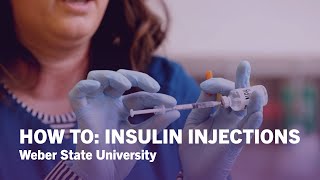
Drawing air equal to the dose and pushing it into the vial before withdrawing liquid equalises pressure, so the plunger does not fight a vacuum and the dose is easier to draw accurately. It is standard technique for any vial, and the Weber State video in this playlist shows the same step with insulin.
Sources (3)
Show the referencesHide
- CDC: Injection safety, frequently asked questions for providers Accessed September 4, 2026.
- FDA: Safely using sharps (needles and syringes) at home, at work and on travel Accessed September 4, 2026.
- Wegovy (semaglutide) prescribing information, DailyMed set id ee06186f-2aa3-4990-a760-757579d8f77b (injection sites and instructions for use) Accessed September 4, 2026.
Canonical URL: https://formblendsvideos.com/videos/veterans-health-subcutaneous-injection. Written by the FormBlends editorial team. This page is educational and is not medical advice; see the medical disclaimer.